Sunday, August 7, 2022

The Good Mask


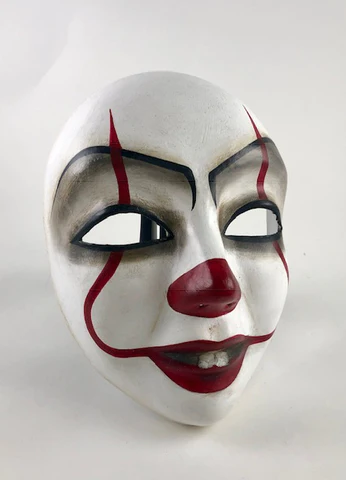
The third mask that one needs to shed to discover one’s true self is the good mask. The good mask is formed by one’s profession, apostolate, or works of charity. Thus, one can be a teacher, nurse, social worker, principal, and such. These identities are based on the work one does. Typically, one’s work is one’s choice or is entrusted to one by family or congregation. Work enables one to take care of self and family, and provides purpose for one’s life. 

An identity based on work can evolve into a seemingly innocuous mask, the good mask. However, a mask is still a mask and hinders one from realizing one’s true self. The good mask being good is insidious, hard to detect and harder to remove. To find one’s pure self, one necessarily needs to look at oneself with the eyes of God and not according to the importance of one’s work. Removing the good mask does not imply that one should stop doing the work one is engaged in. Rather, it means that one ought to cease viewing oneself through the work’s temporary and changing conditions. Professions and occupations change. The true self cannot be understood and realized through fleeting circumstances. 

The danger in wearing the good mask is that one becomes blind and cannot see life holistically. If one works as a manager and sees oneself only through one’s work, one would relate to others only as a boss to subordinates. One might even relate to everyone else as one’s subordinates because one would only know one way to relate - through one’s work. One’s identity would exist only if one holds a position. One would find it extremely difficult when removed from the position or when retired, as the identity shatters. The good mask can make one believe that one only is competent and superior and that others are inept and inferior. 

Continuing with this example of a manager, a better way of understanding one’s work is to see that one is not a manager but has the responsibility of managing for a specific period. Management is not one’s identity but only a responsibility that can change at any time. One’s true identity is much deeper and permanent than shallow identification with transient work. 

Self-awareness can light up the process of recognizing and peeling off the various forms the good mask assumes in one’s life.

           Some questions that can further one’s journey of self-realization are: 

1.     Am I not more than the work I do?

2.     Has my work become my worship?

3.     Do I always look at others through the lens of my position?

4.     Do I introduce myself to others stating my profession or occupation?

5.     If one is unable to work for certain reasons, does one not have an identity?

Sunday, July 31, 2022

The Neutral Mask


The second mask that one needs to shed to further the journey of finding one’s true self is the neutral mask. The neutral mask is neither bad nor good. A few examples can help us to understand what the neutral mask is: state or country, sect or religion, language, gender, race. These identities are merely attached to an individual because one is born in a particular place and time. In themselves, these identities do not make one superior or inferior to others. 

These and other forms of the neutral mask can be used to bring harm to people belonging to groups different from one’s own. When a person or group sees itself through the eyes of this mask, others belonging to different groups often become strangers and even enemies. Many tortures, discriminations, genocides, and wars are results of overidentification with the neutral mask, identities people acquired because they were born or reared in a particular group. What if one was born or reared in a culture one presently hates? 

 The neutral mask can be used to do good to people both within and without one’s group. For instance, one can use one’s language to spread noble ideas, respect different groups and enhance peace. Therefore one does not have to disown the identities that one is born or reared in but one does have to go beyond them and see oneself as a human being, more similar to others than different from others. 

Recognizing one’s true nature which is much deeper than the neutral mask, can help one to love and respect others. To become a universal person and have the ability to embrace the whole of humanity one must not look at others or oneself through the eyes of a neutral mask. 

Self-awareness can light up the process of recognizing and peeling off the various forms the neutral mask assumes in one’s life. 

Asking oneself hard questions can pave the way to remove the neutral mask:

1. Do I think of my country, religion, language, gender, or race as superior or inferior to others? 

2. Do I keep defending or criticizing the group I belong to? 

3. Can I recognize that people from other groups are deserving of equal dignity? 

4. Can I understand myself as much more than the identities I acquire due to my birth and rearing? 

5. Once I die, will my various identities matter? 

One must discover one’s pure self. 

Monday, July 25, 2022

The Bad Mask


           A true journey towards discovering the authentic self must involve shedding all duplicity and duality. The three masks which one needs to remove to find one’s pure self are the bad, the neutral and the good. 

Let us begin by reflecting on what the ‘bad mask’ is. The bad mask can include the use of arrogance, anger, rigidity, black-and-white thinking, pleasing others, other unethical behaviors and means of livelihood and many more such. The individuals who use the above tactics for personal gain, whether material or immaterial, are wearing the bad mask. The person who wears the bad mask might not even be aware that s/he is wearing one and how it causes pain and damage to others and to him/her. A person in authority might justify humiliating employees as necessary to get the task done or that one should get angry to prove to others that s/he is the boss or that one must give in to others’ demands to be accepted by them. The individuals using the bad mask may even try to convince others and also themselves that such tactics are required to be successful in life.

Using any of the above-mentioned unhealthy thinking or behavior for a long time makes even the individual believe that it is his/her real self. Putting on the bad mask leads to frustration and fractures in relationships not only with others but also with oneself.  

           Self-awareness can light up the process of recognizing and peeling off the various forms the bad mask assumes in one’s life.

One way to grow in self-awareness is to sit down with oneself daily and ask questions of oneself, such as

1. Why do I do what I do?

2. What are the consequences of my thought and behavior for others and me?

3. What do others feel about my behavior?

4. Do I tend to hide some things from others and project what I am not?

5. Who benefits and how by the way I appear in front of others?

Another effective way is to ask a friend or mentor, who you know would be honest, his/her feedback on your life aspects.

Gradually but certainly awareness can help one to find one’s pure self.

Sunday, July 17, 2022

The Mask


To find meaning and contentment in life one must discover one’s true self. The best way to know oneself is to remove all masks (personas) which one wears, consciously or unconsciously, as part of one’s nurturing by family and society. 

‘Mask’ refers to the public image of one’s personality that one lives and projects. The mask is not one’s real self rather it is a role or expectation from others that one tries to live up to. The mask is also adopted by an individual in the attempt to appear a certain way to gain acceptance, love or even to gain control over others.  

There are three masks which one ought to become aware of and drop totally: the bad, the neutral and the good. The process of shedding one’s masks is not a sudden or easy one but that can be accomplished gradually and gracefully. To remove one’s masks layer by layer is to reach ultimately the true self, the pure self. 

We all wear masks. To refuse to acknowledge one’s masks is to close the door to self-awareness, which finds later expression in frustration, resentment, duplicity, depression, and paranoia. Any person who hopes to reach the heights of integrity and self-awareness needs to have the courage to identify and drop all masks. 

In future articles we will reflect upon the three masks. Meanwhile, you are welcome to ponder the forms these masks could take. 


Notes

1.     ‘Persona’ depending on the context, is the public image of one's personality, the social role that one adopts, or simply a fictional character. The word ‘persona’ derives from Latin, where it originally referred to a theatrical mask (Wikipedia).


Wednesday, June 29, 2022

Know Thyself


The great Greek philosopher, Socrates, instructed, “Know thyself”. Knowing oneself is an essential journey one needs to embark upon. The task of knowing oneself cannot be accomplished in a few days, weeks, months, or even years. Knowing oneself is a lifelong process and is often an arduous one.  

Why should one undertake the long and demanding journey of knowing oneself? Is knowing oneself important? Yes. Knowing oneself is perhaps the biggest of all gifts one can give oneself and others. Frederick Perls, one of the founders of Gestalt therapy, believed, “If we cannot understand ourselves, we can never hope to understand what we are doing, we can never hope to solve our problems, we can never hope to live rewarding lives”.

Knowing oneself helps one become aware of what one does, what one needs to do and what one should not do. Self-awareness leads to sound choices, from simple to complex ones. Further, knowing oneself enables the facing of daily challenges effectively and the finding of meaning and contentment in one’s life. Knowing oneself helps identify strengths and weaknesses, empowering one to handle life’s problems successfully. Sound awareness of one’s strengths and weaknesses will protect from draining energy and wasting time as one would know which strength to harness in a given situation. 

To find peace, one has to live and be who one is, which requires getting in touch with oneself. One of the most satisfying journeys is the journey within — knowing oneself. It is impossible to live a rewarding life and to enjoy peace without knowing oneself. 


Notes

1.     Socrates was a Greek philosopher from Athens who is credited as the founder of Western philosophy and among the first moral philosophers of the ethical tradition of thought (Wikipedia).

2.     Frederick Perls, 1973, The Gestalt Approach & Eye Witness to Therapy

Saturday, June 11, 2022

Gift of Ourselves

            My previous blog, Gift of Giving, reflected the need to root our lives in the gift of giving if we are to experience contentment and peace. When we think of leading a life founded on the gift of giving, what might come to our mind immediately are our unique talents (Henry Nouwen). Talents are abilities to do certain things well. For example, one can be talented in repairing digital gadgets, giving powerful speeches or organising programs. It is wonderful to enjoy the talents of others and offer ours to them. However, Life-Guru, Nouwen says, “The real question is not ‘What can we offer each other?’ but ‘Who can we be for each other?’” It can be easier to offer help to others and then retract ourselves into our secure shells, wherein we do not really connect with others. On the contrary, we are invited to genuinely connect with others by offering the gift of ourselves. 

           In offering the gift of ourselves what we really offer others is our own joy of living, inner peace, silence, and our sense of wellbeing (Nouwen). When we offer the gift of ourselves, we live and share with others who we truly are. Living and sharing become one, without any dichotomy, selfishness, or mask. Offering the gift of ourselves is much deeper, powerful, and human than merely offering our talents. Living a life rooted in offering the gift of ourselves brings contentment and peace not only to ourselves but also to others. 


Saturday, June 4, 2022

Ho’oponopono Prayer


’Ho’oponopono‘ is an ancient Hawaiian practice used to bring reconciliation, forgiveness, and healing within a group, family, or person. Hawaiians believe that the Ho’oponopono practice not only reconciles people in conflicts but also brings healing for physical ills resulting from conflicts, resentments, and hatred. Doctor Sanjay, HOD of the Psychology Department at Sacred Heart College, Tamilnadu, recently shared the efficacy of this prayer in the lives of clients and of people. He witnessed a lady in her forties, bedridden, and suffering for years due to osteoporosis, healed through the practice of Ho’oponopono to the point where she was able to move around by herself. This practice can be helpful regardless of whether our ills are physical or emotional.

‘Hoʻoponopono’ is defined in the Hawaiian Dictionary as: ‘To put to rights’ and ‘Mental cleansing: family conferences in which relationships were set right (hoʻoponopono) through prayer, discussion, confession, repentance, and mutual restitution and forgiveness’ (Wikipedia).

The mantra that Ho’oponopono uses is extremely simple and easy to practice. The mantra is:

“I’m sorry,

Please forgive me,

Thank you,

I love you.”

The first two phrases invite us to feel sorry for all the wrongs we have done and seek forgiveness from God, and the people we wronged, including ourselves. The last two phrases encourage us to thank and love God, the universe, others, and ourselves. This prayer can be recited a few times a day with awareness and in serenity. 

There are many benefits of practising Ho’oponopono. Ho’oponopono can help in reducing stress, anxiety, and depression. It can help in resolving negative emotions which emerge when one is hurt by others and improve the quality of relationships with people, living or dead. It boosts emotional, physical, and inner strength and enables one to live life with a clean heart and mind. In short, the Ho’oponopono practice removes emotional debris, heals the past, and fills the future with gratitude and hope.


Notes

1.     The experience of the lady who suffered due to osteoporosis was shared with a group at the Fountain College, Krishnagiri, by Dr Sanjay. 

2.     Hoʻoponopono

3.     Kuhu Gupta, The Power of Ho'oponopono & How 4 Simple Things Can Change Your Life

4.     The Power of Wholeness And Healing: Ho'oponopono

5.     A sample of Ho’oponopono prayer sung